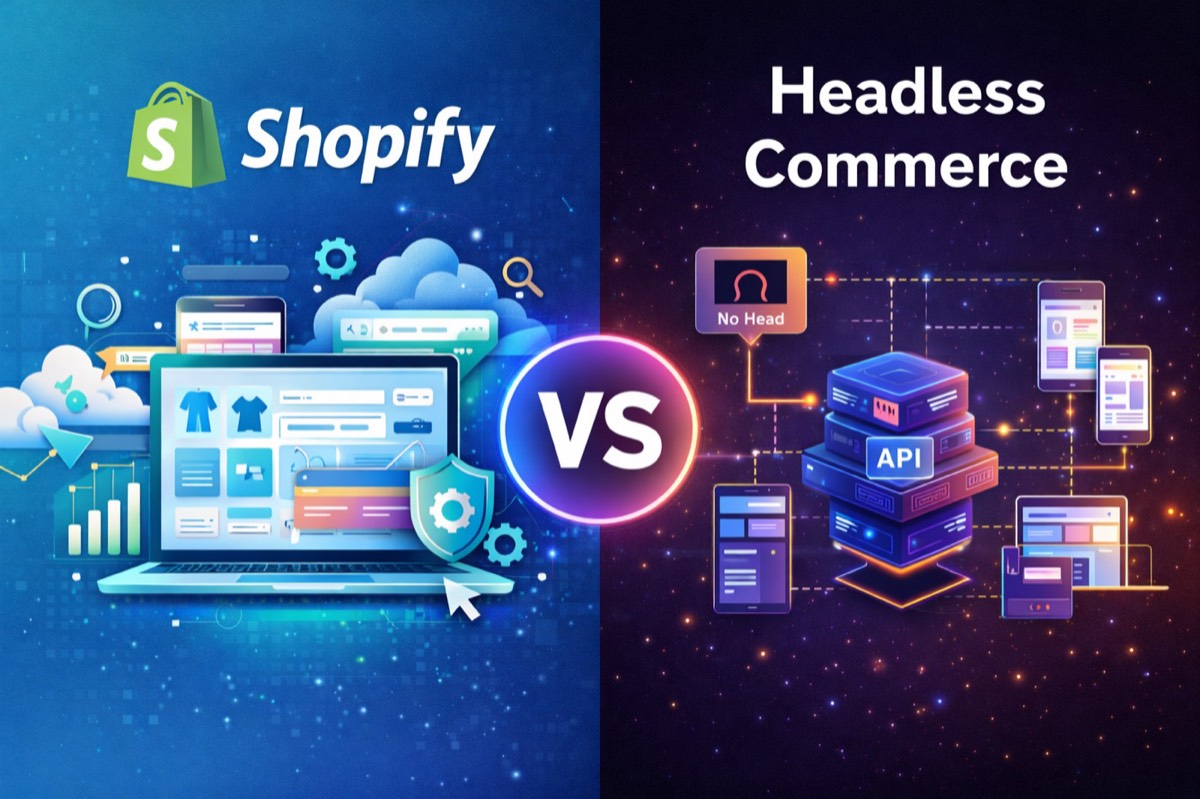
One of the biggest misconceptions around headless commerce is that it automatically leads to better performance and higher conversion rates. In reality, performance gains come from how well a site is built, not just the architecture behind it.
Shopify’s recent updates, including improvements to storefront rendering, checkout optimisation, and AI-driven enhancements, mean that many brands can achieve exceptional results without going headless.
Headless becomes valuable when brands require highly custom experiences, complex integrations, or unique frontend functionality that standard themes cannot support. For everyone else, it often adds unnecessary friction.
“Headless commerce is not a shortcut to growth, it is a technical decision that only makes sense when your business truly demands it.”
Shopify has evolved far beyond a simple eCommerce platform. With native performance improvements, built-in conversion tools, and a rapidly expanding ecosystem, it now powers some of the fastest-growing brands globally.
At the same time, headless commerce has gained traction, promising greater flexibility, custom frontends, and enhanced performance. This has led many brands to question whether Shopify alone is enough, or whether a headless approach is the next step.
The reality is that both approaches have their place. The decision comes down to your growth stage, technical requirements, and how much complexity your business actually needs.
Headless commerce separates the frontend from the backend, allowing brands to build completely custom user experiences while still using platforms like Shopify for backend operations.
This approach gives developers full control over design, speed, and functionality. However, it also introduces more complexity, higher costs, and ongoing development requirements.
For most brands, Shopify’s native capabilities now cover the majority of performance and UX needs, without the overhead that comes with headless builds. The gap between the two is closing quickly.